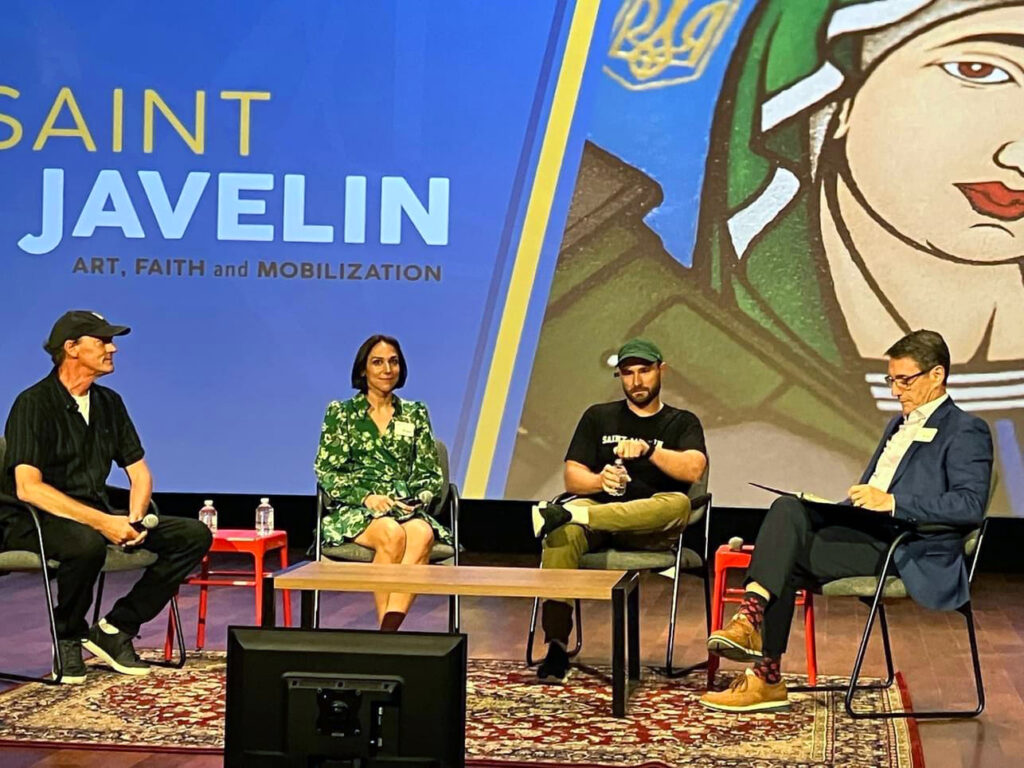
I was honored to participate in an amazing event, “Saint Javelin: Art, Faith and Mobilization”, at The National World War I Museum and Memorial in Kansas City, where my Saint Javelin painting has been on exhibit since last year.
I joined a panel alongside Museum and Memorial Specialist Curator Patricia Cecil, President and CEO Matthew Naylor, and Christian Borys, founder of the Saint Javelin corporation, who has raised more than 2 million dollars to aid Ukraine.
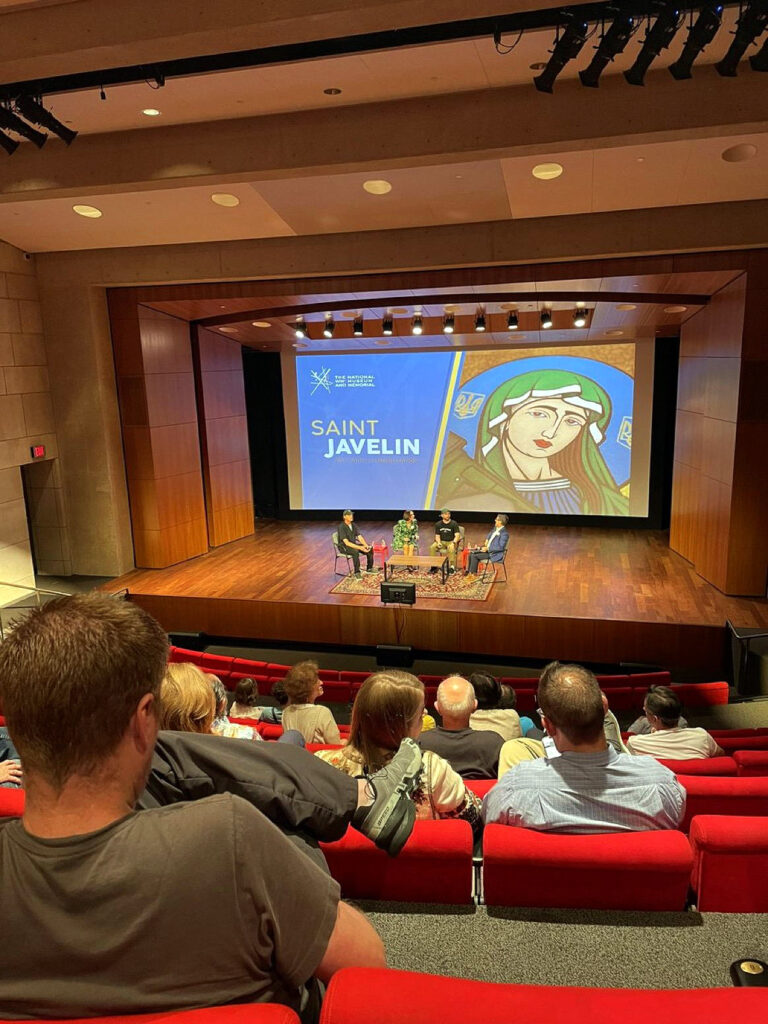
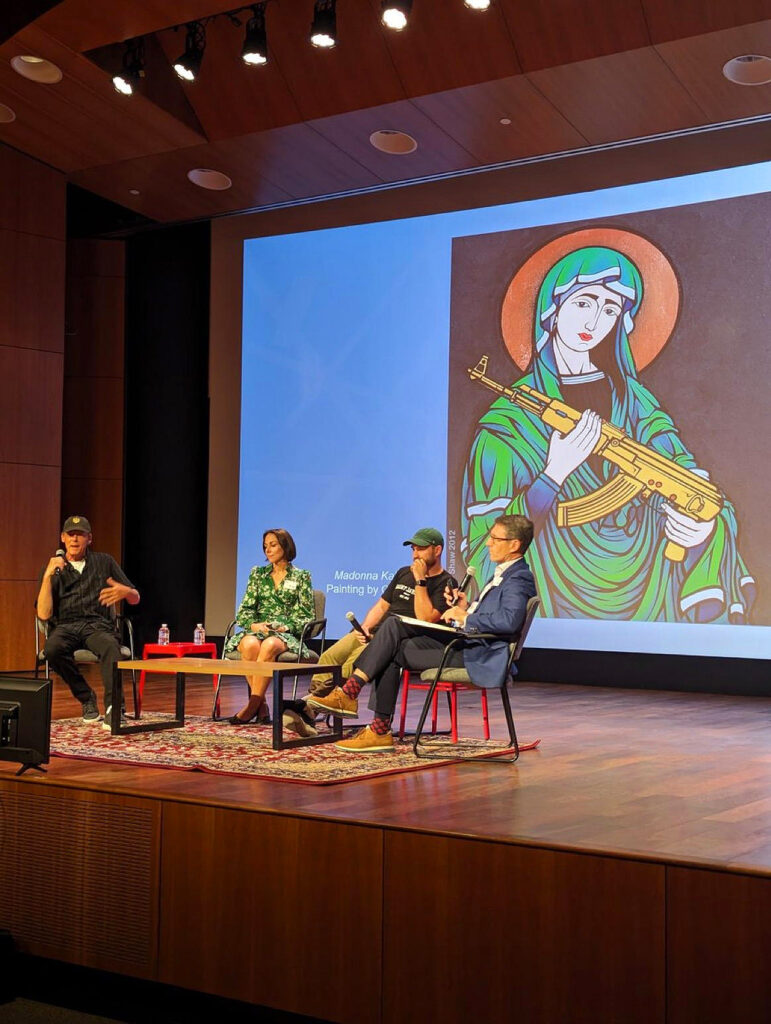
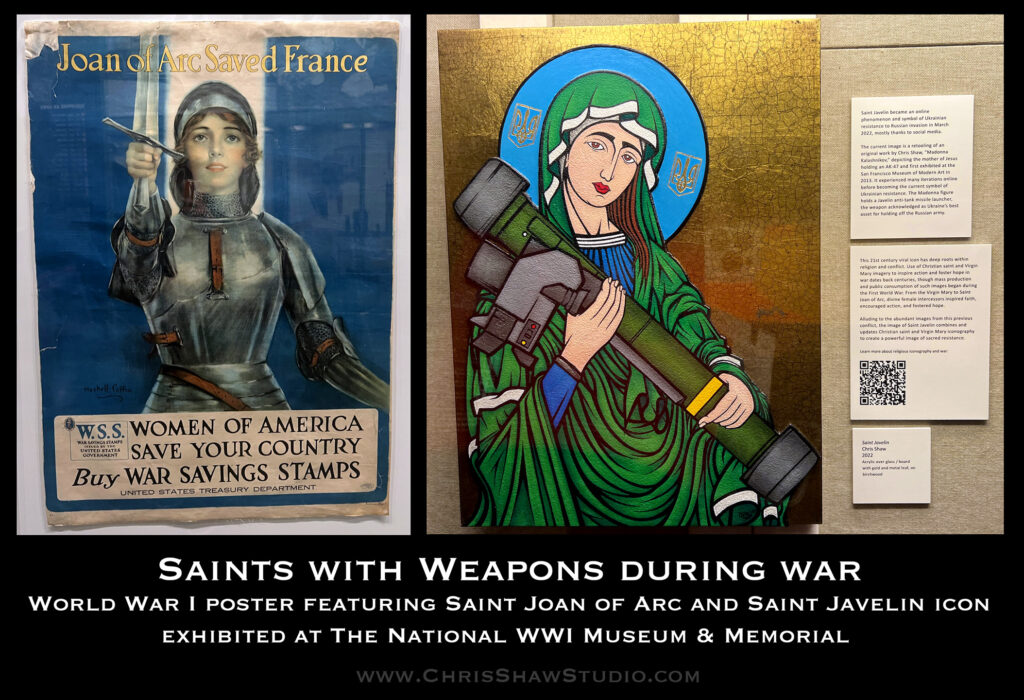
We engaged in an enlightening conversation addressing the contemporary parallels, through religious iconography, between WWI and the rise of Saint Javelin as a modern “War Icon” amid the present-day conflict in Ukraine. With Saint Javelin as a topic, we discussed her creation as well as her historic predecessors, focusing on art, faith and mobilization amid catastrophe. While I don’t think Saint Javelin will ever be a Joan of Arc, she was definitely in good company amid the conversation.
‘Saint Javelin: Art, Faith and Mobilization’ can be viewed on YouTube below.
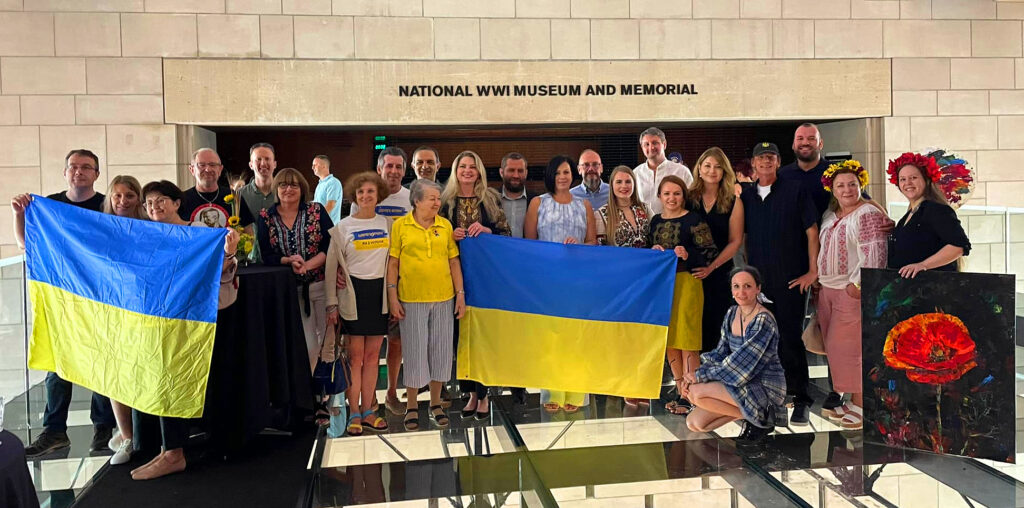
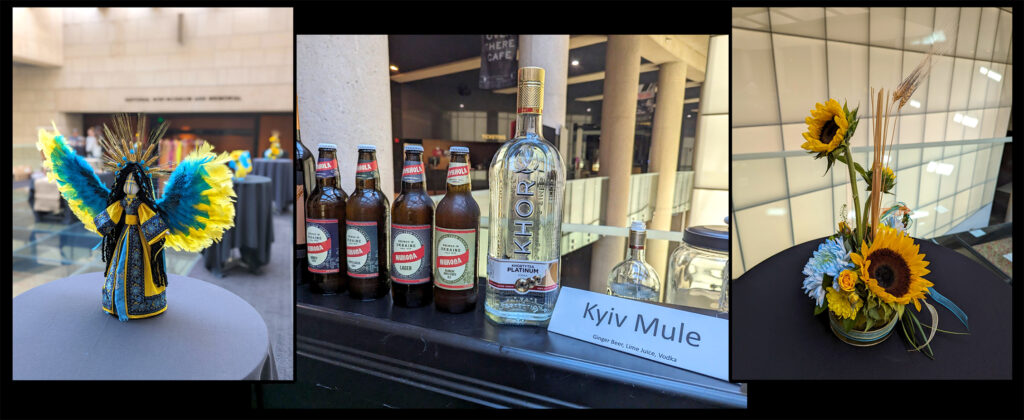
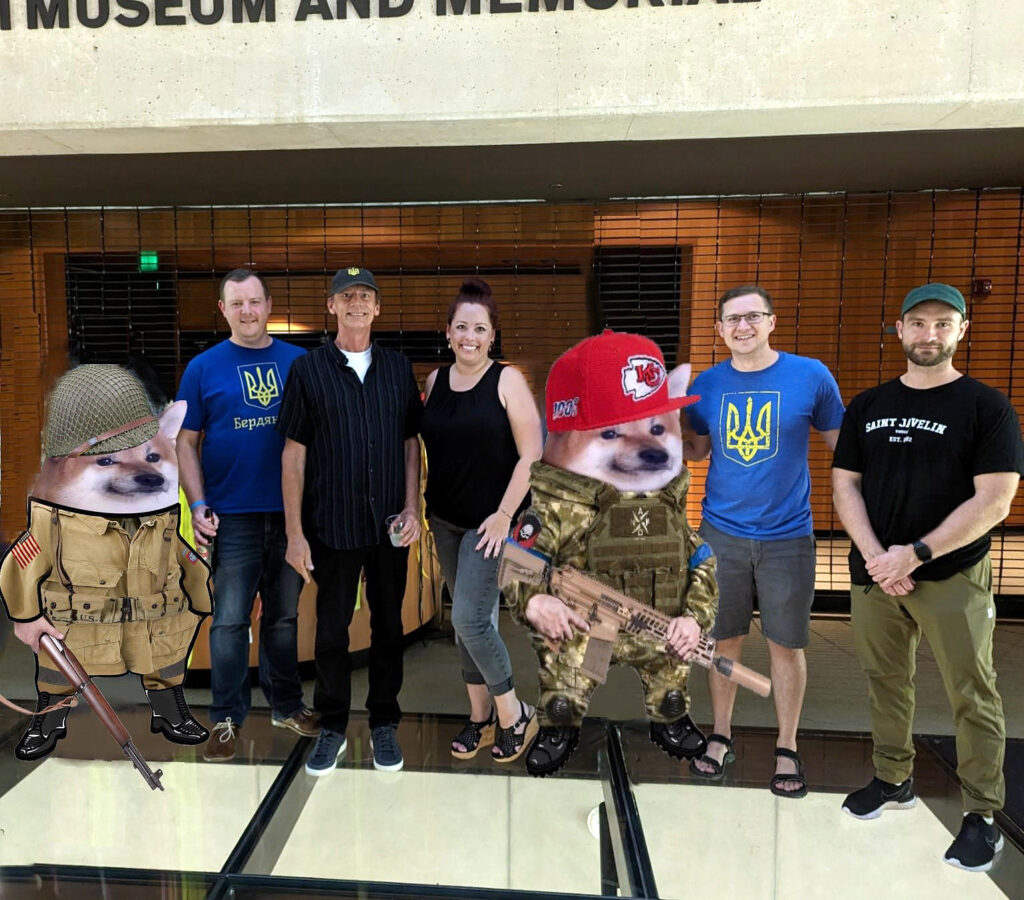
Following the panel was a beautifully adorned reception at the museum, organized in partnership with Stand With Ukraine KC. I truly enjoyed meeting people and having some heartfelt conversations about Ukraine and Saint Javelin. Thanks to everyone who came out despite the heat.
I visited the museum twice on my visit. The first, was a solemn and horrific reminder of the Horrors of War, modern weapons, and truly terrible machines. As the artist, I’ve said Saint Javelin’s proximity to these horrors has always been a disturbing facet of the image for me. My second visit, (and amazing tour by curator Patricia Cecil) brought a much different and more humanized perspective, with an exploration how soldiers (and the world) coped with war’s horrors as well as some of the art and creativity that emerged – the many parallels to the modern phenomenon of Saint Javelin’s image, use, and various meanings were impossible to ignore.
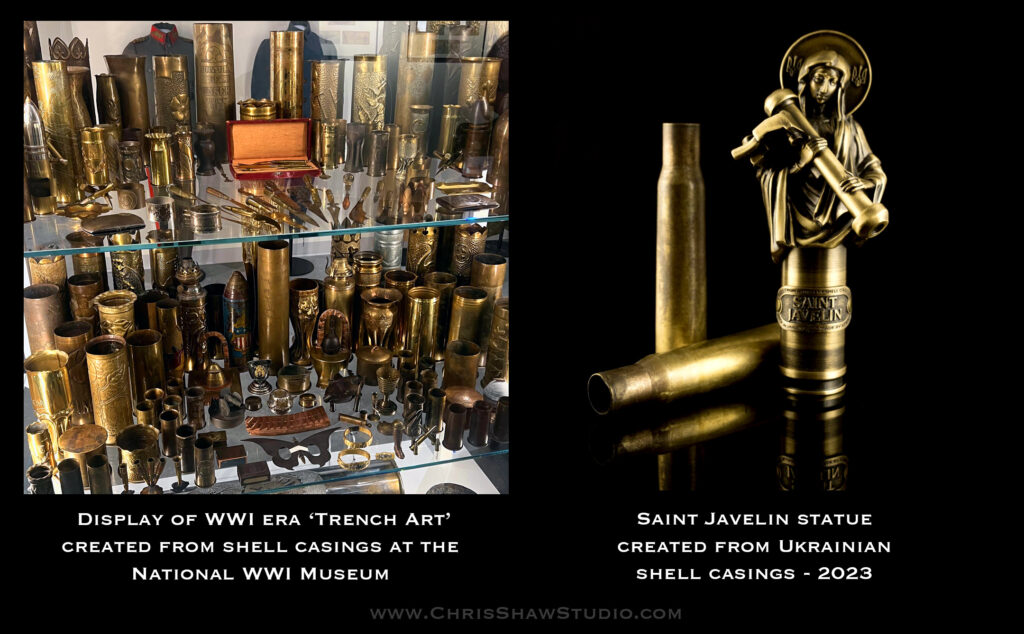
Ultimately, my visit to the National World War I Museum and Memorial brought a deeper perspective on how the Saint Javelin art and image has, and can, affect people amid this senseless war in Ukraine. Saint Javelin lives a life of her own, meaning many things to many people, she is a stark reminder of the power of art & image. She now exists in many forms, from pixels and stickers, to art made from paint, stained glass, or recycled artillery brass. She is a protector and symbol of resistance to Ukraine, while being a deeply subversive image in Russia. She is blasphemy to some and a symbol of strength and hope for others. As her creator, at the root, the image’s many forms over the years has always been about freedom and democracy – I want her to do good things.
A huge thank you to Christian Borys, Patricia Cecil, and Dr. Matthew Naylor on the panel, as well as everyone at the National World War I Museum and Memorial and Stand With Ukraine KC for a beautiful event. Thanks to Paige for her efforts and the fantastic photos, and of course the KC Fellas, and NAFO for turning out strong.
My original Saint Javelin icon will be on display at the National World War I Museum and Memorial until September 10, 2023.
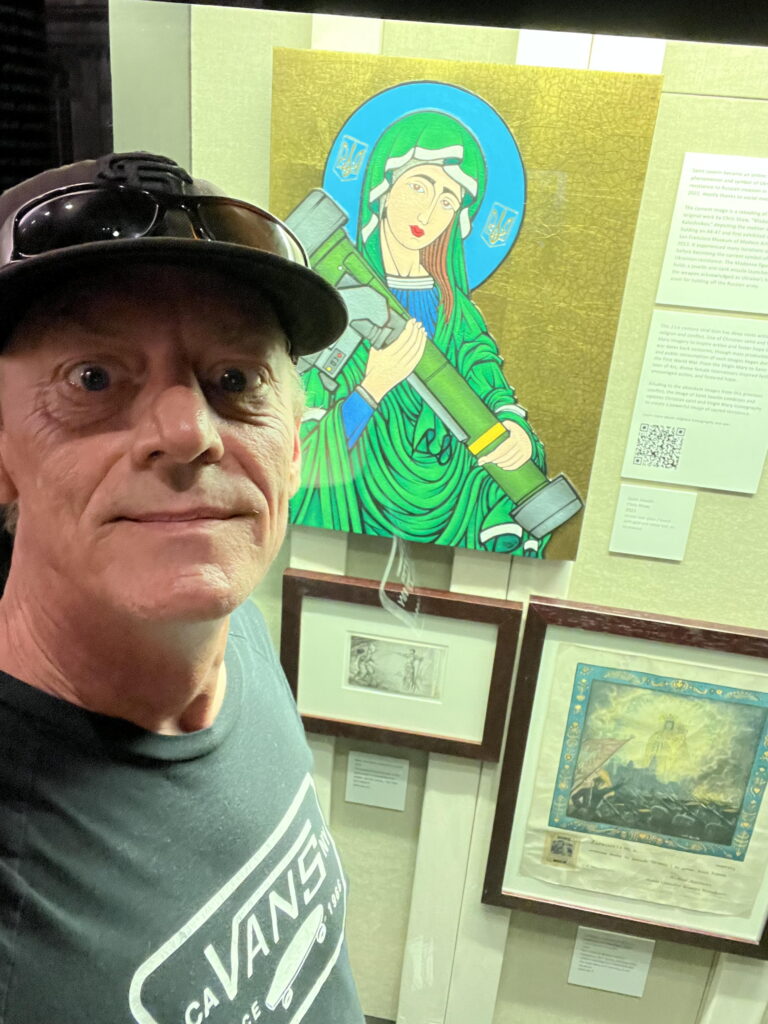
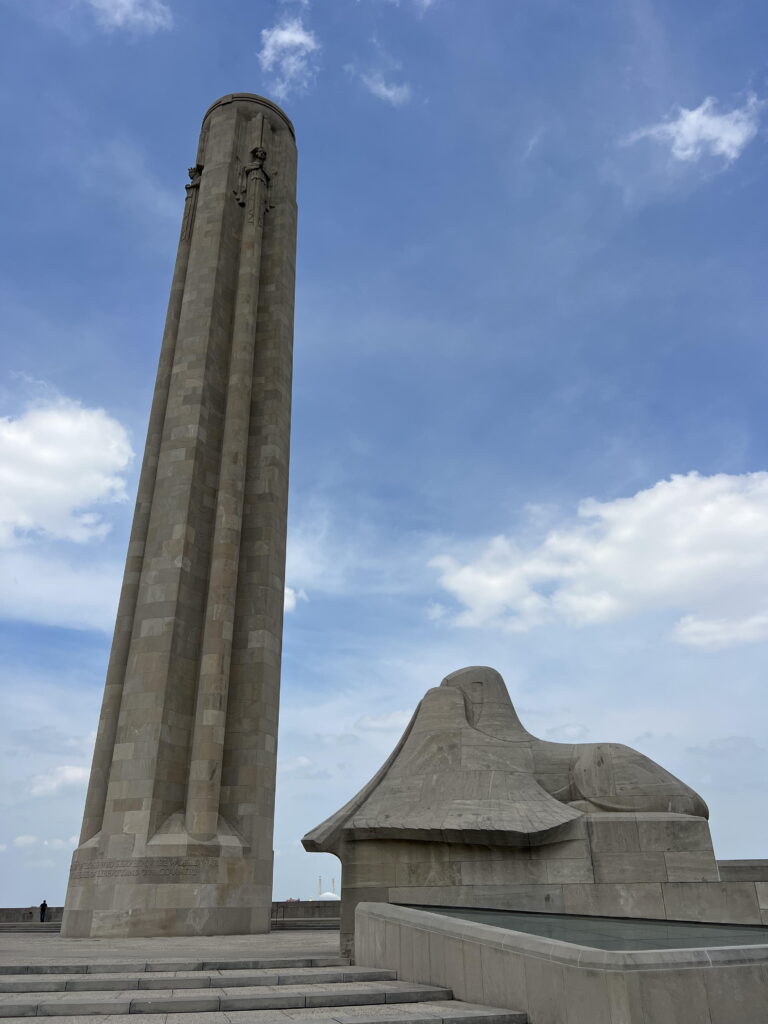
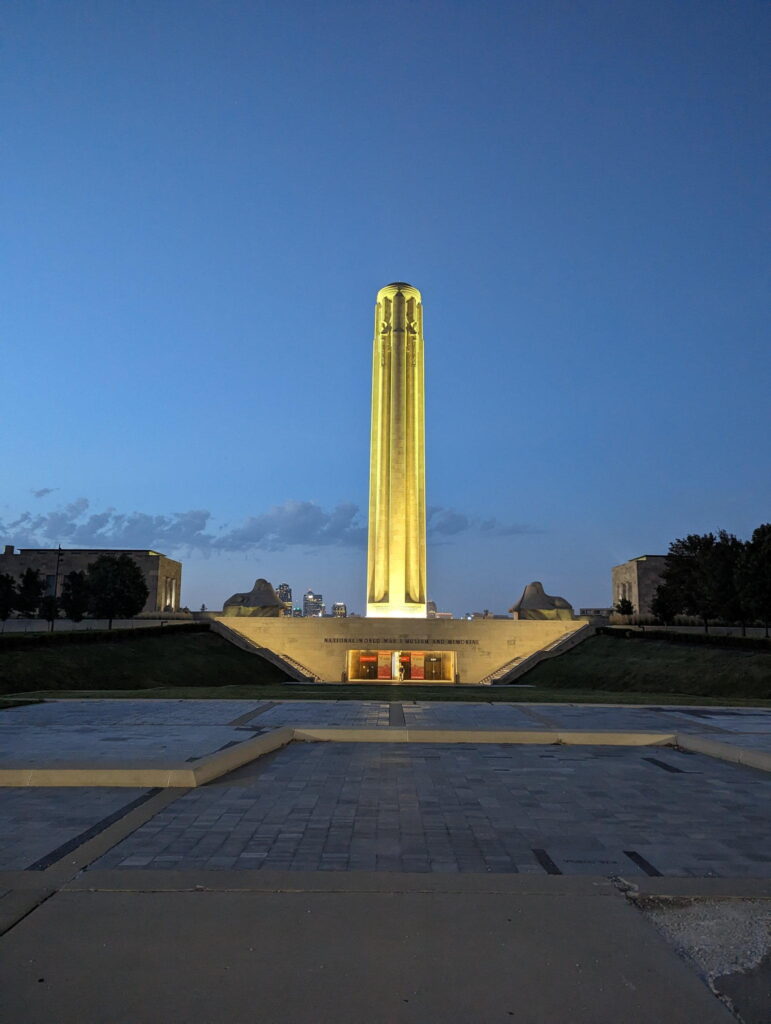
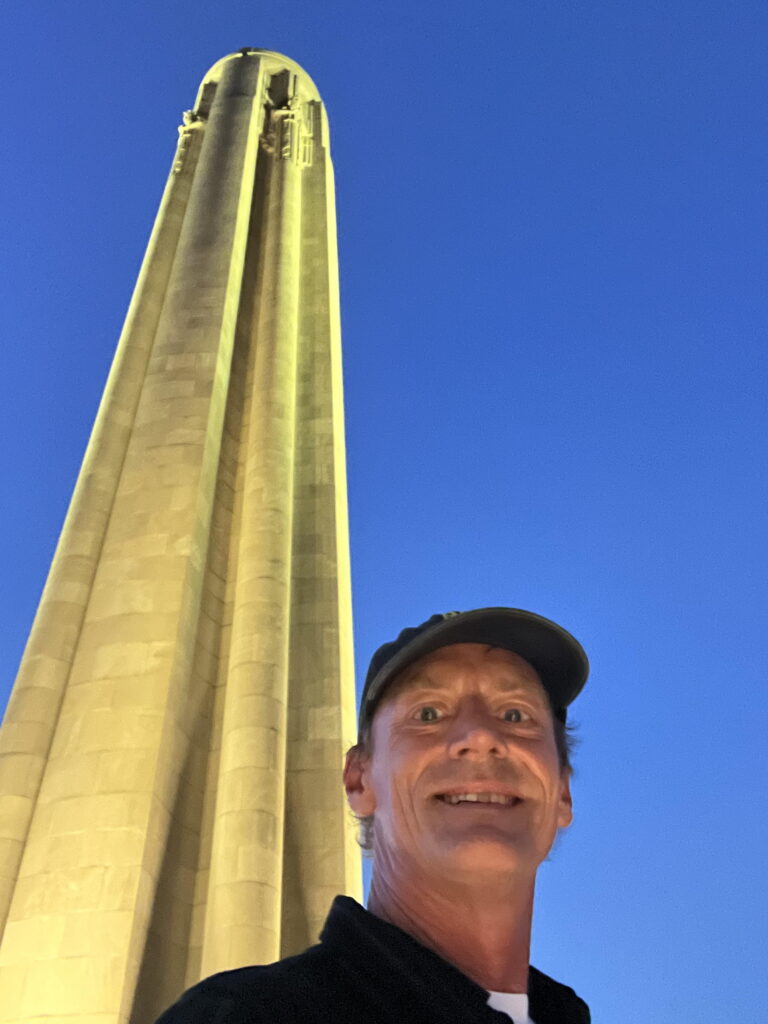

I’m pleased to announce that the exhibit of my Saint Javelin painting at the National World War I Museum and Memorial in Kansas City has been extended through summer 2023.
National WWI Museum and Memorial
2 Memorial Drive,
Kansas City, MO 64108 USA
www.theworldwar.org
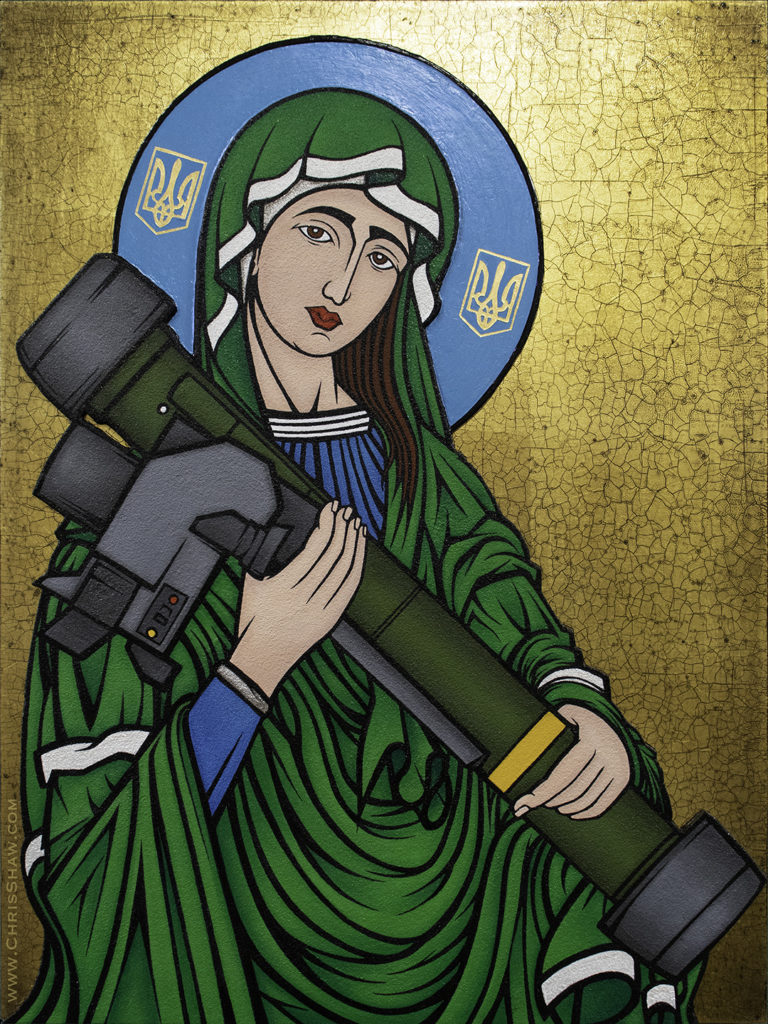
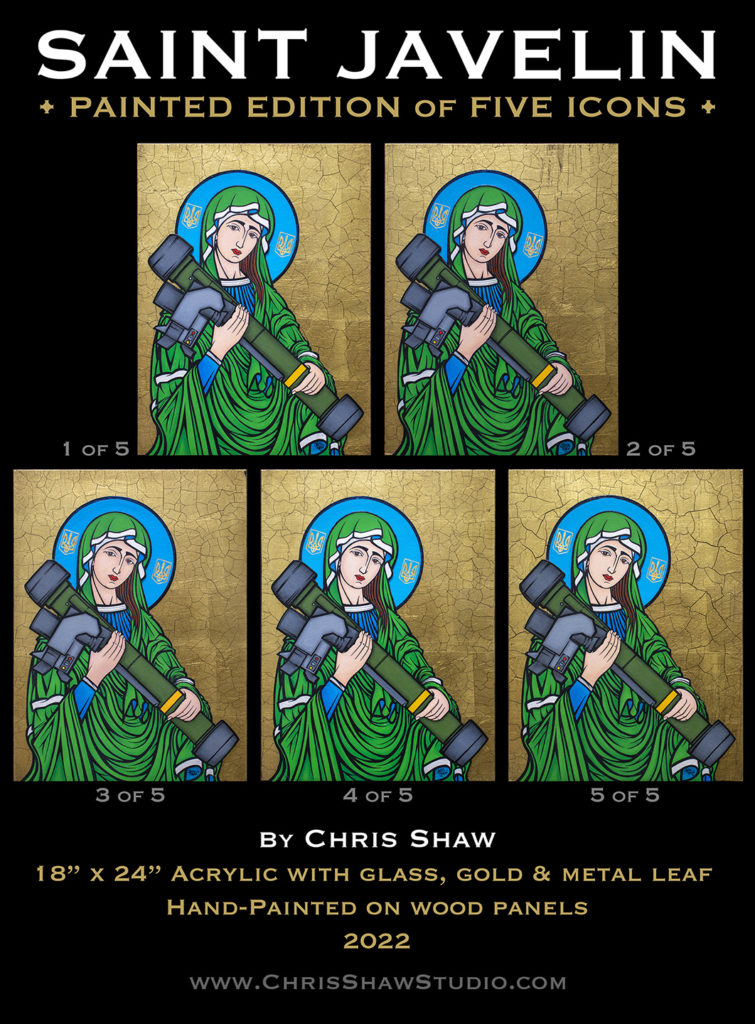
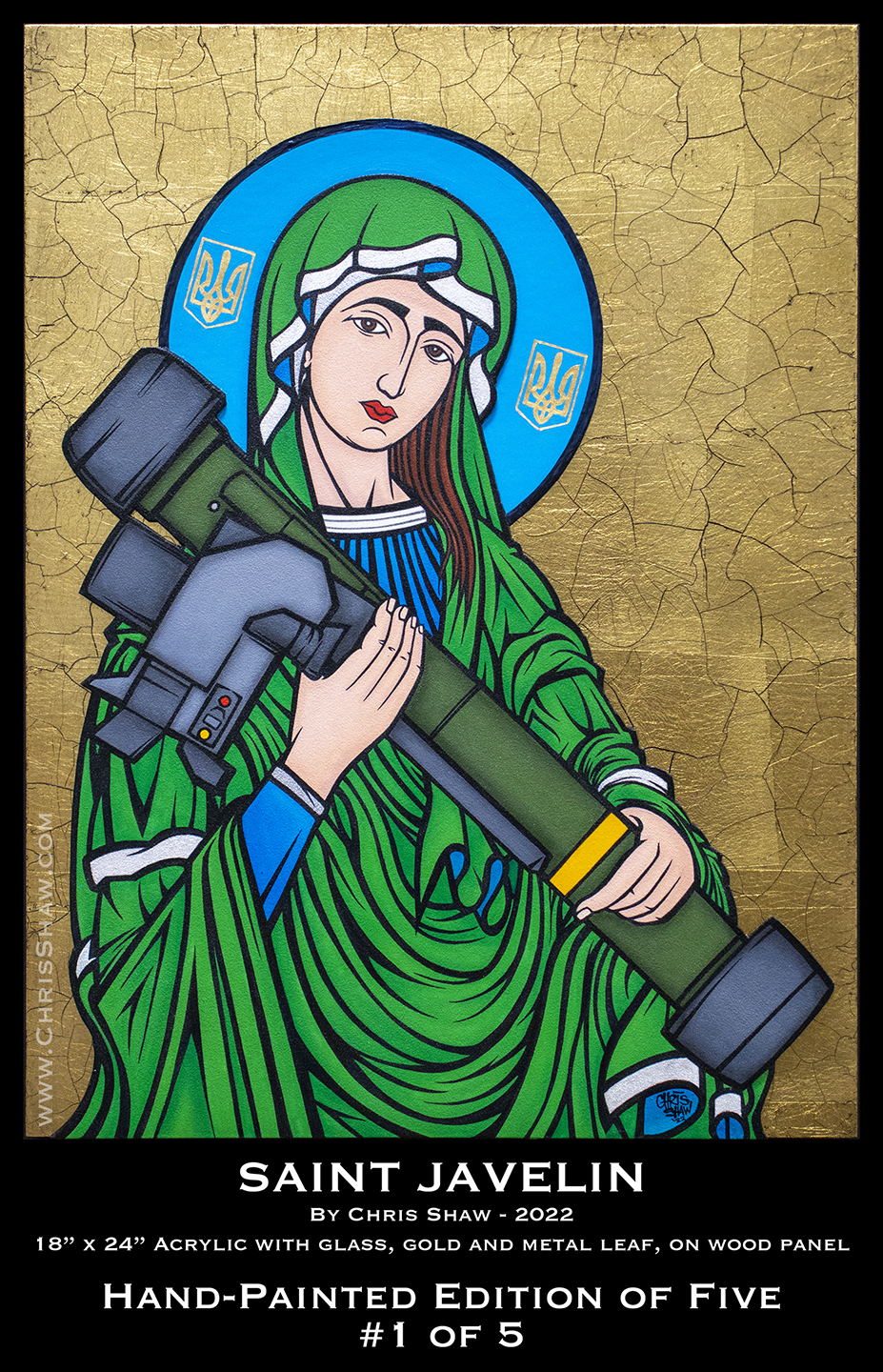
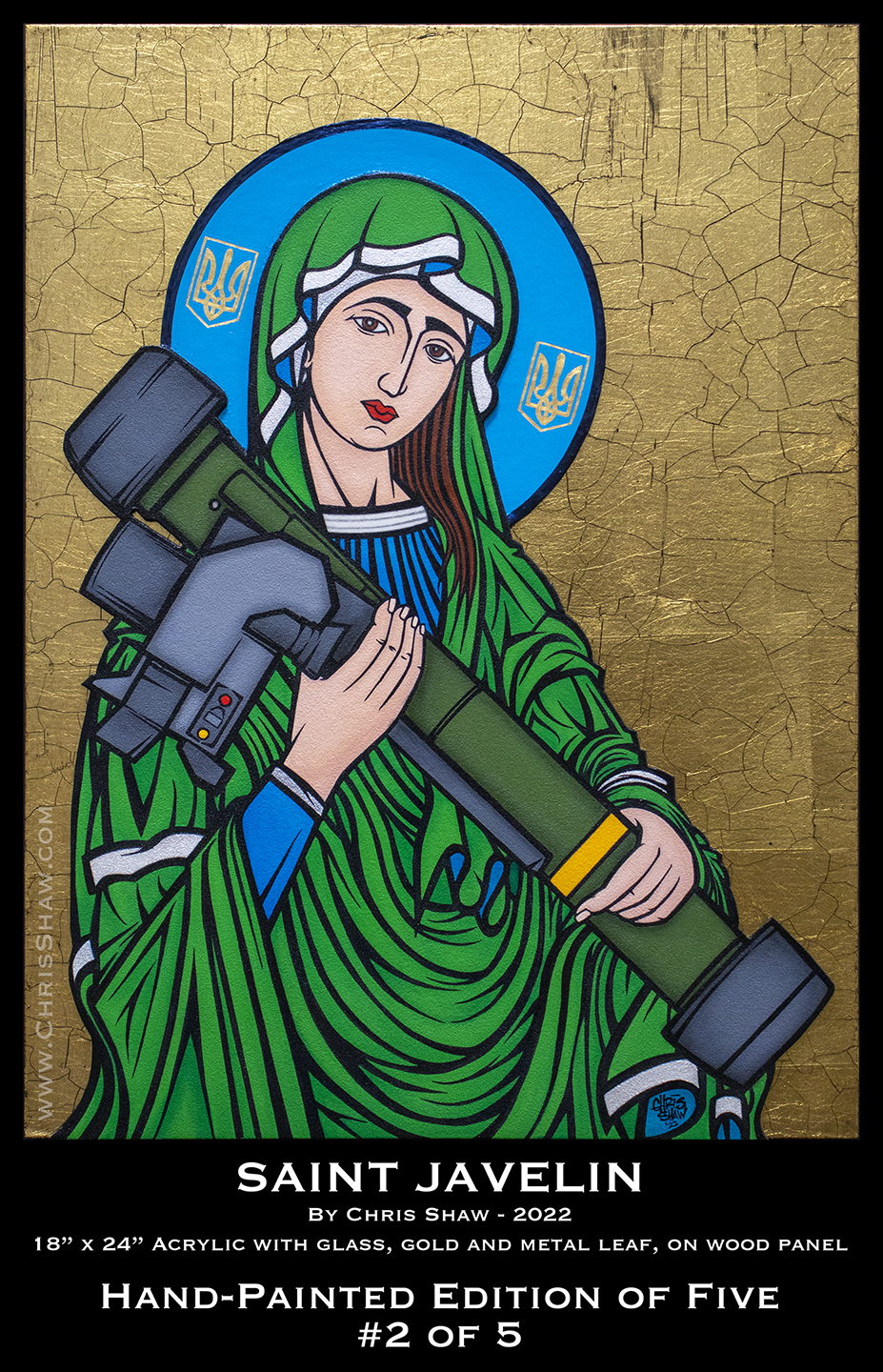
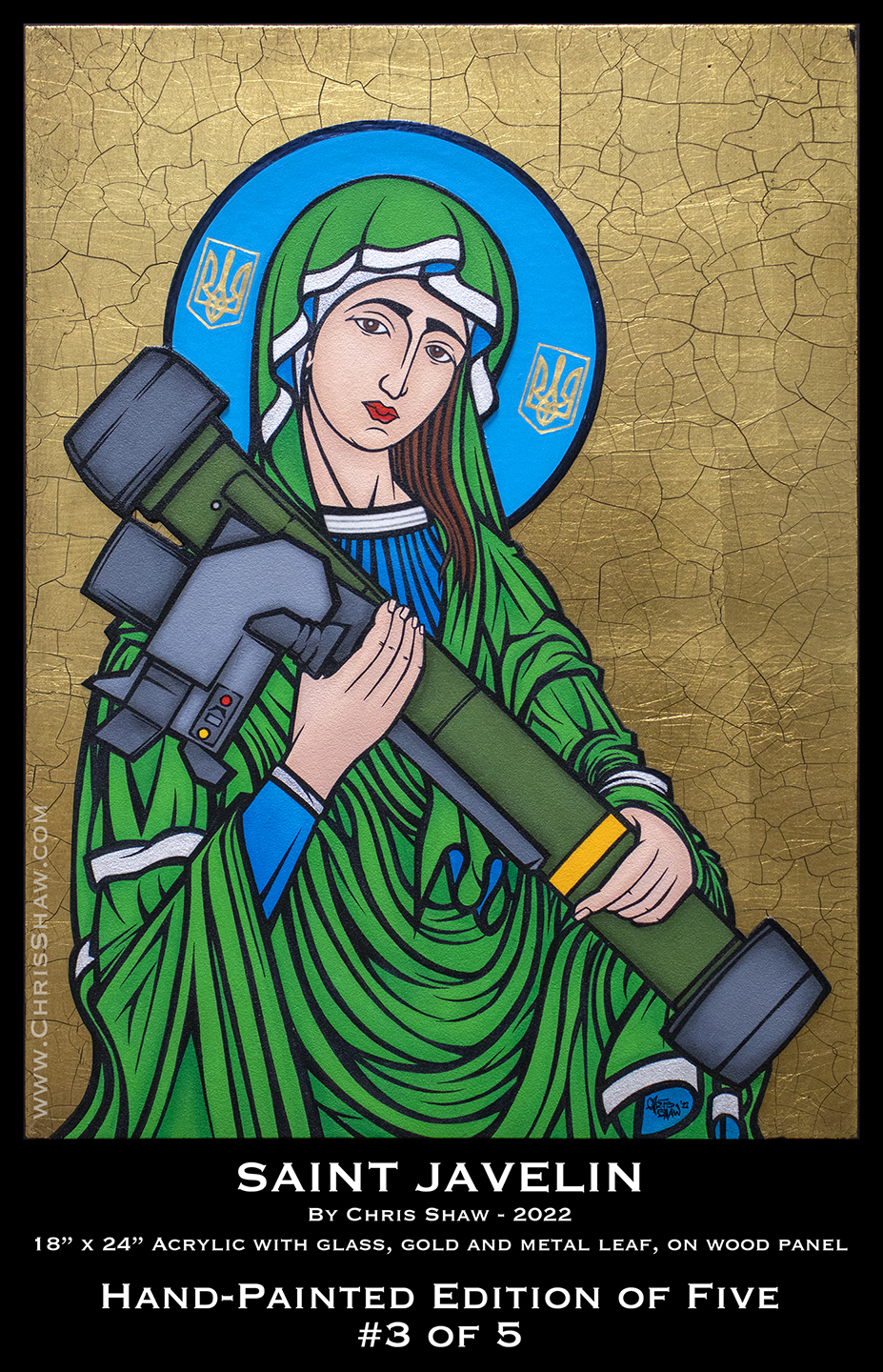
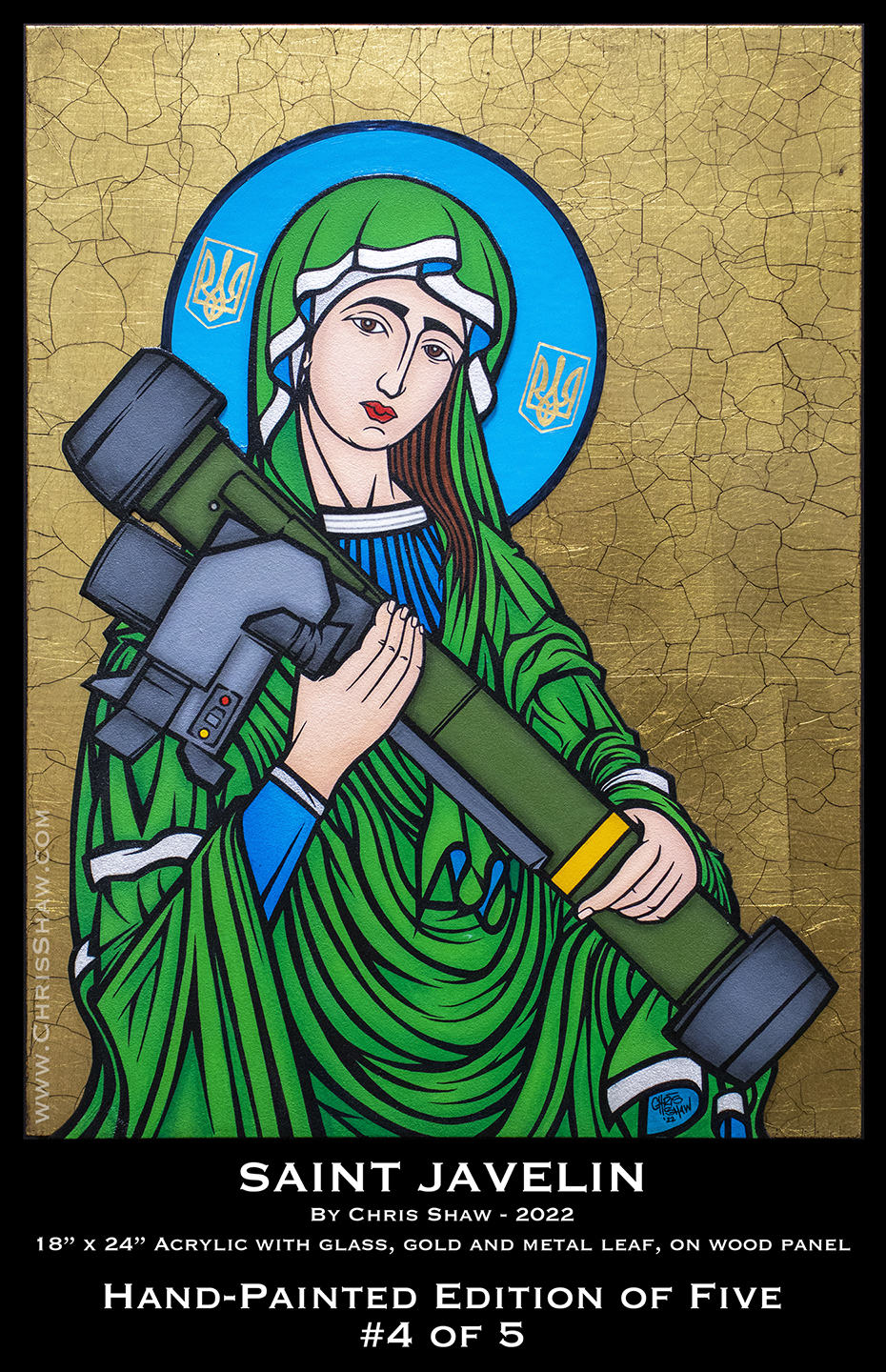
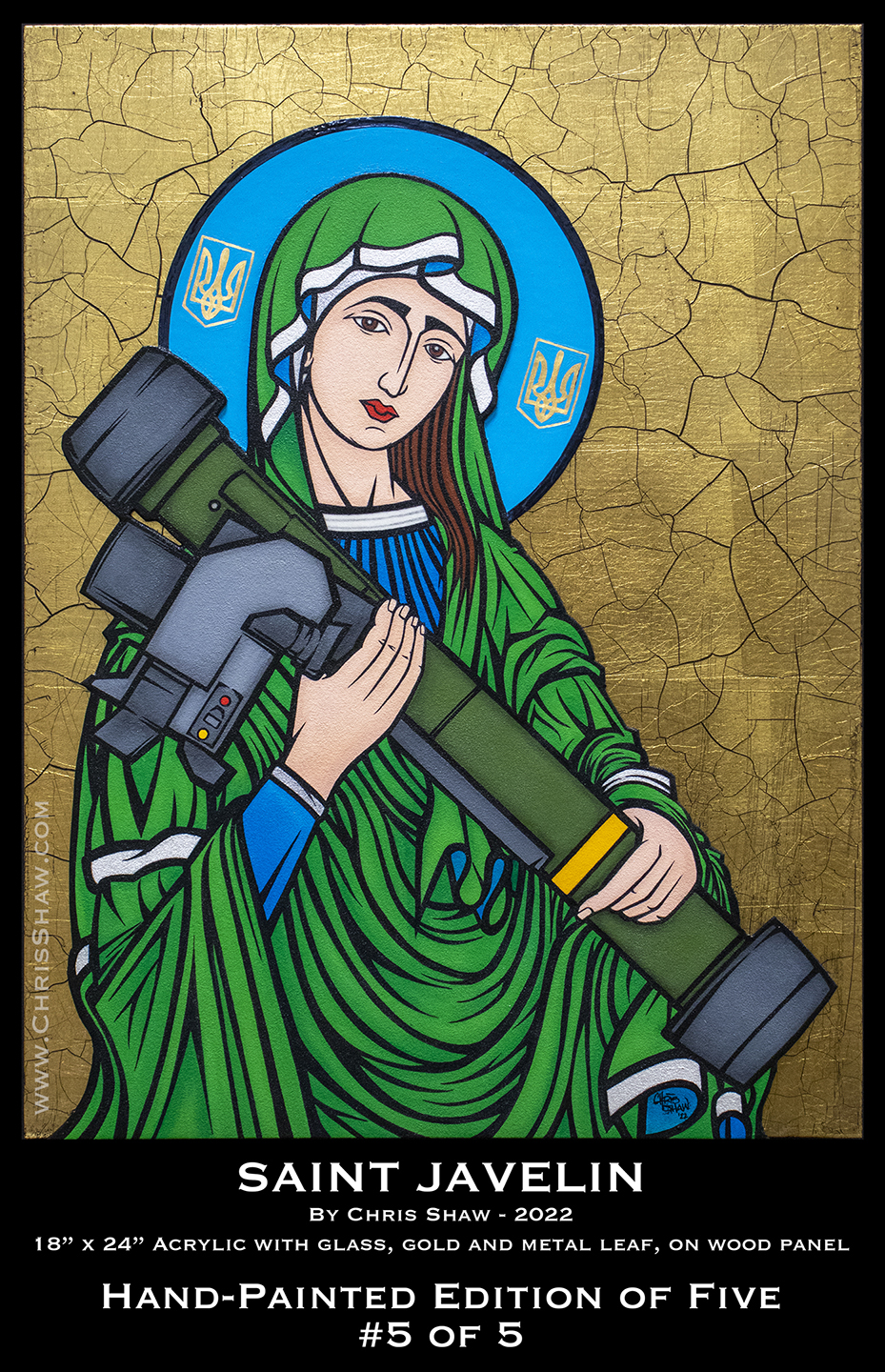
The Painted Edition of Saint Javelin consists of five, hand-painted, signed & numbered Saint Javelin icons, painted by Chris Shaw. Each painting is unique while retaining Saint Javelin’s precise original form, proportions and color. The icon’s figures are painted with saturated acrylic color glazes over a custom ground of glass on board, giving the icon texture, a dimensional effect, and colors a subtle translucency. The colors used in this edition of five were also painstakingly matched to the original Saint Javelin painting. Saint Javelin’s halo tridents shine with 24-karat gold leaf, while hand-made silver and pearl paints embellish the figure’s rich green robes. Each figure is completed with precise brushwork using a rich gloss black that brings Saint Javelin to life, empowering her piercing brown eyes while she effortlessly holds her famous Javelin missile launcher.
The Saint Javelin icon’s gold backgrounds consists of multiple layers of metal leaf and rich amber varnishes applied over a wooden panel. Each icon’s gold background and sides have been finished with a craqueleur treatment, further giving the paintings their own unique character and transforming the art into a unique object that can be viewed from multiple angles.
Each painted Saint Javelin icon has been signed by the artist on the front, and include a title, edition number, and artist’s signature on the back of the panel.
Saint Javelin
Chris Shaw
18” x 24” Acrylic with Glass, Gold, and metal leaf, on wood panels
Edition of Five
2022
The purpose of the Saint Javelin Painted Edition is to raise funds for relief in Ukraine. The paintings will be released exclusively through www.SaintJavelin.com – release info will be posted here as it becomes available.
From the artist:
“As I have watched Saint Javelin propagate online, and among the countless stickers and shirts, I wanted my Saint Javelin paintings to stand apart as unique, hand-made objects. Like my original Saint Javelin icon, conceptually and technically, I chose to use gold and metal leaf, combined with custom mixed colors. I gave the image further depth using textures and deep glazing – all things that can not be produced digitally or printed. The art has been painted on thick wood panels to enhance the dimensionality of the art as a real world object. Painted over two months, the paintings were completed in early November 2022.
“It’s been a privilege to partner with SaintJavelin.com and Christian Borys to produce the Painted Edition of 5 original Saint Javelin icons – it’s a high honor to use my art to help raise funds for Ukraine”
– Chris Shaw